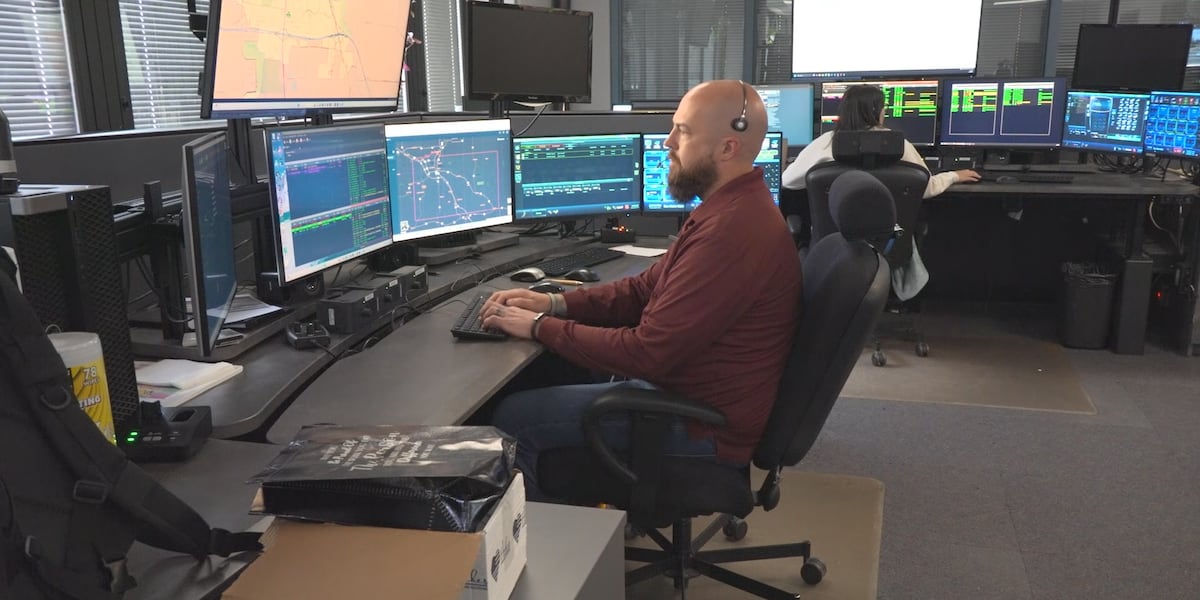
EAU CLAIRE, Wis. (WEAU) – Keeping the community safe and recognizing those who lend a helping hand in emergency situations.
Public safety telecommunicators or 911 dispatchers are being recognized for their hard work as the first person to answer a call for help.
911 dispatchers also take on the literal definition of ‘first responders’. Which can also take a toll on their mental health. Being the first to answer calls, gather important information and assign responding personnel to help. all of these things require them to be fast acting and precise in their line of work.
So in any 911 call, telecommunicators have to be ready for whatever comes their way.
Scott Turner, a telecommunicator for the Eau Claire Police Department explains what it’s like.
“You never know what’s going to happen when you answer the phone.” he said. “We’re helping with pre-arrival instructions. We’re helping with anything you can think of as far as what they would need before people arriving on the scene.”
Responding to a 911 call requires getting three main points covered first; where, what and who. This is to inform either police, fire or EMS.
He says the job requires being quick to react in any emergency.
“Multitasking, being able to listen to what everyone else in the room is doing as well as doing your own job at the same time.” he said.
Holly Hakes, a licensed professional counselor and owner of Hakes Wellness Solutions, says what skills she sees are best fit for the job.
“I mean I think people in particular nowadays doing 911 work, they need to have some good technical skills. Map readers, help people navigate. You need to have some good verbal skills, too, great listening skills. You need to be able to navigate high stress situations and keep your calm.” she said. “Because the work that they do everyday, exposes them to trauma and stress.”
She says these requirements being needed all at once can impact their mental health down the line. Saying it’s important to prioritize their well-being especially when there’s a full workload.
“They’re people with big hearts. That want to help, want to make a difference, and it’s difficult because they’re the front line, they hear the front line, they send the resources out and they don’t always get to know how it turns out.” Hakes said.
“Could be on their worst day, helping people with mental health issues. From controlling bleeding to helping with seizures, overdoses.” Turner said.
Staying on the line the entire time until help arrives. Even then they’re involved in the situation if responding personnel need additional information.
“We’re also running people involved for their responding medics, so for their safety and for the officers as well. Entering warrants, there’s a wide range of stuff that we do.” Taylor said.
For that wide range of work, many are thankful.
“We see you, we appreciate you, we want you to take the best care of yourself.” Hakes said.
With increasing call volumes and work loads, Scott Turner says there’s always a need for more dispatchers.
Copyright 2025 WEAU. All rights reserved.
Officials speak on dispatcher mental health