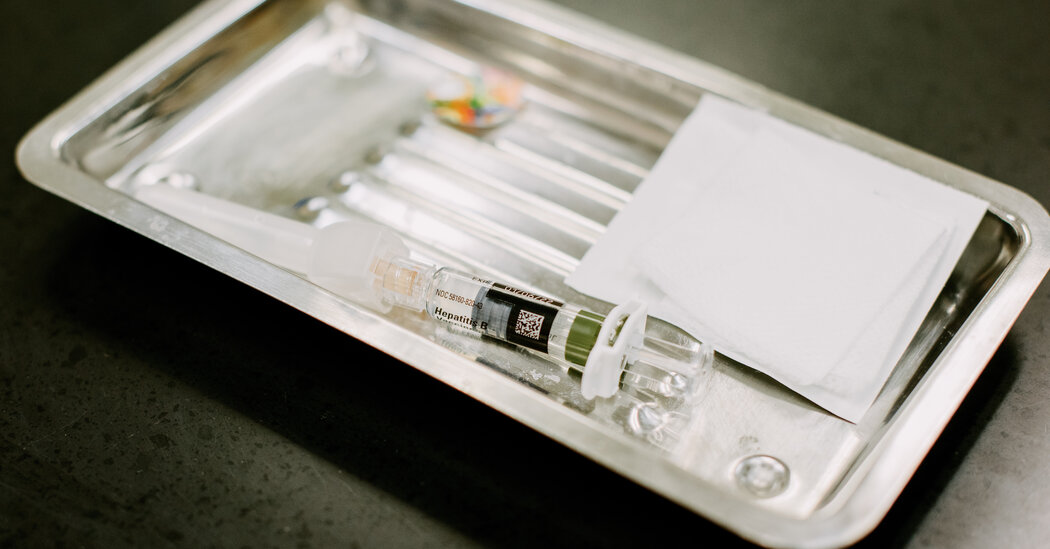
A federal vaccine committee is expected to vote on a significant change to the nation’s vaccine policy on Thursday, deciding whether to end a decades-long recommendation to immunize all babies at birth against hepatitis B, a highly contagious virus that can damage the liver.
The committee, whose members were appointed by Health Secretary Robert F. Kennedy Jr., is most likely to end the practice, and to delay vaccination for most babies until they are older, Dr. Kirk Milhoan, the panel’s newly appointed chair, said in an interview. But, he added, the panel was likely to continue to recommend the immunization of newborn children of women known to be infected with the virus, and perhaps also the infants of women who were not screened for infection.
The committee, called the Advisory Committee for Immunization Practices, will meet again on Friday to debate broader changes to the timing of vaccines given to children, as well as the composition of the shots. They will also address whether aluminum salts, which are added to vaccines to increase the immune response, should be removed from vaccines, Dr. Milhoan said.
Although the committee members will not vote on Friday on the issues they discuss, some public health experts see the debate as a likely prelude to sweeping changes in the childhood vaccine schedule. Aluminum salts are present in dozens of vaccines, for example, and their removal would require the development of entirely new shots.
Will All Newborns Still Receive Hepatitis B Shots? A Committee’s Vote Will Tell.