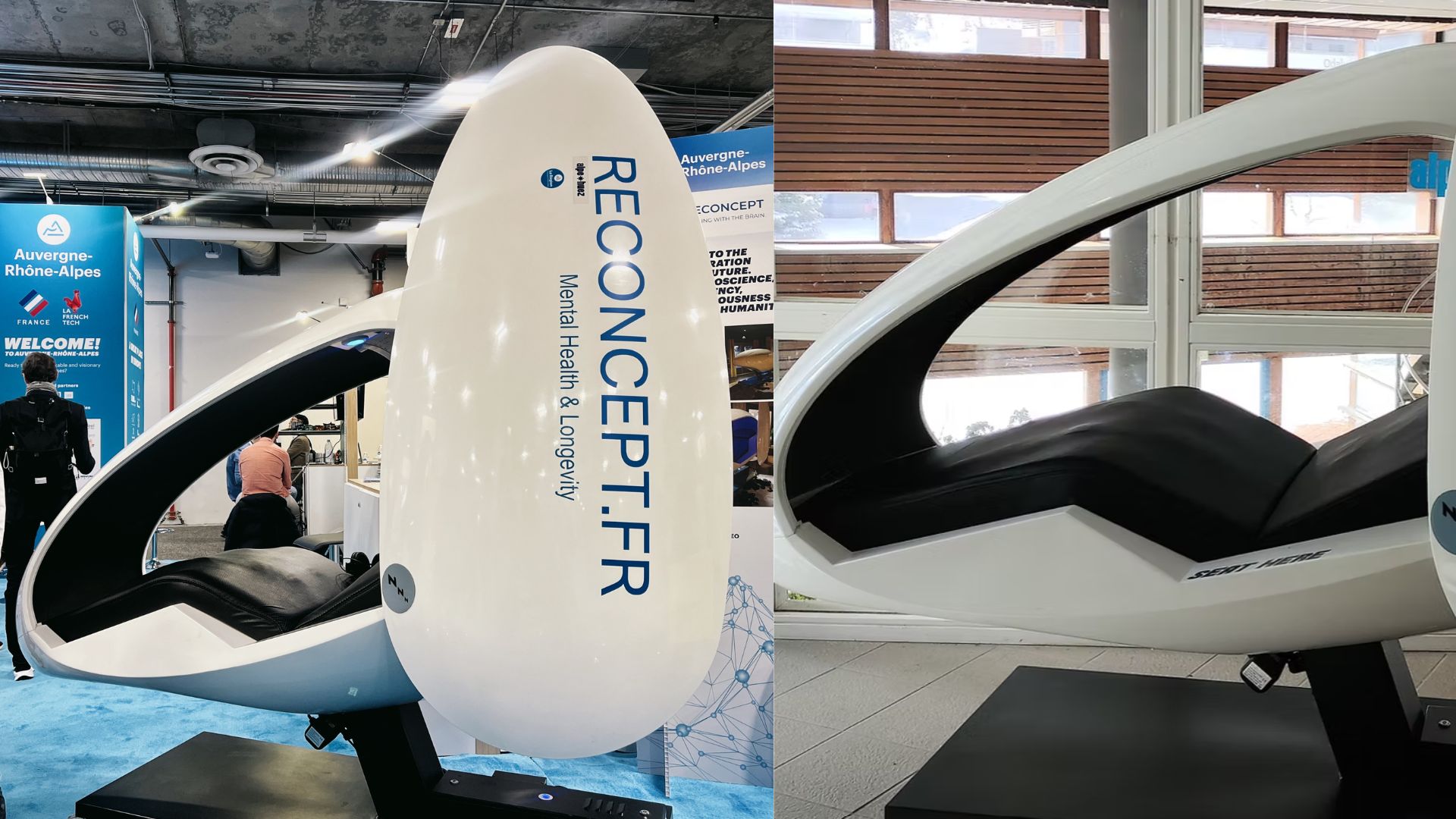
At CES 2026, French wellness technology company Reconcept is presenting an immersive system designed to help the body recover from stress, fatigue, and mental overload.
The enclosed platform combines sound-based frequency therapy, a zero-gravity body position, and targeted massage into a single experience aimed at prevention rather than treatment.
The system targets people exposed to constant stimulation, including healthcare workers, corporate employees, athletes, and military personnel.
Reconcept says its approach allows the nervous system to reset by reducing physical pressure and sensory noise.
In an interview with Interesting Engineering, Lou-Ambre Esnault, Reconcept, described the system as a multi-layered wellness environment rather than a single therapy device.
Multi-layered recovery design
“This is an immersive wellness system that combines three different therapies.”
The first layer focuses on sound and vibration delivered through a helmet. Reconcept uses music paired with specific frequencies tailored to different physical and mental needs.
These programs address issues such as stress, burnout, digestion problems, and sleep quality.
Users choose the program before beginning a session, allowing the experience to match their immediate needs.
The second layer relies on body positioning. The system places users in a zero-gravity posture originally developed for aerospace applications.
This position distributes weight evenly across the body, reducing localized pressure and muscular tension.
By removing constant physical strain, the body can shift energy toward recovery rather than resistance.
Reconcept links this reduced stimulation to broader physiological effects.
When the body no longer responds to continuous pressure and input, it can redirect resources toward restoring balance.
Military stress applications
The company says the system has already seen use beyond civilian wellness settings.
“It has also been used by the military.”
According to Reconcept, the system performs especially well in high-stress environments where prolonged mental load impacts performance and recovery.
“It’s particularly effective for stress.”
The military use case aligns with Reconcept’s emphasis on prevention.
Rather than treating injuries or psychological conditions, the system aims to reduce accumulated strain before it becomes chronic.
The company positions the technology as a support tool for resilience and readiness, especially in roles that demand sustained alertness.
“This system is designed for anyone who wants to use wellness as a form of prevention.”
Reconcept has begun limited real-world deployments as it gathers feedback and refines the system.
“The system is currently deployed only in France.”
The company has installed one unit in a wellness center and another in a hospital setting.
These environments allow Reconcept to observe how different user groups respond to the same core technology.
The system’s modular design supports broader adoption.
Reconcept says it can operate in health centers, sports facilities, workplaces, and recovery spaces.
Corporate use cases include employee well-being programs aimed at reducing burnout and improving focus.
User comfort remains central to the design.
“People don’t feel claustrophobic inside.”
Session length depends on availability and need.
While Reconcept recommends sessions of at least 30 minutes, shorter experiences can still produce noticeable effects.
“Even in five minutes, people often say they feel more relaxed.”
For ongoing news, in-depth reporting, and key developments from CES 2026, read the IE team’s coverage here.
gravity wellness pod helps combat military stress