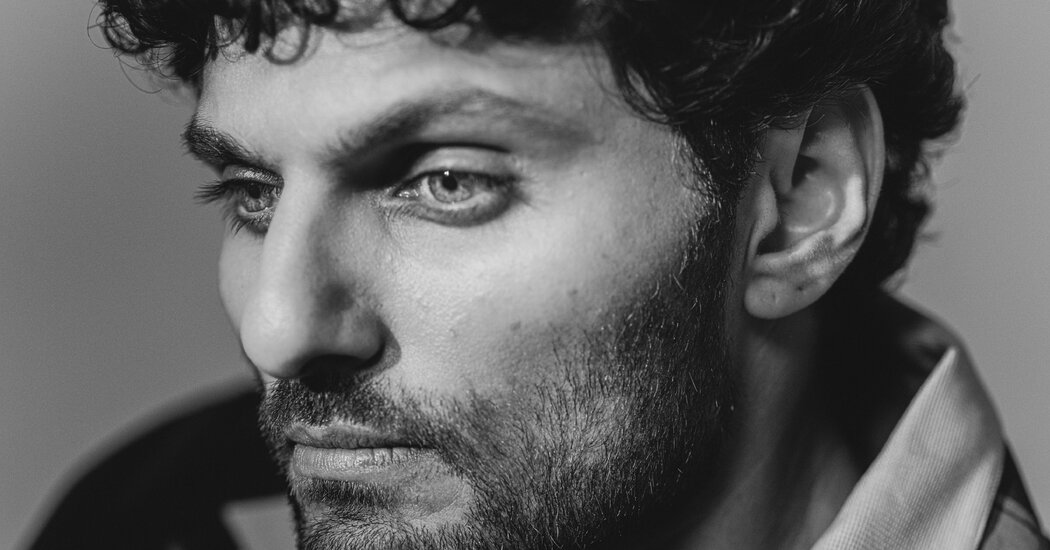
Jay Shetty is without a doubt a giant in the world of wellness and self-help. His podcast, “On Purpose,” which features interviews about personal growth with various experts and celebrities, is wildly popular. The show’s YouTube channel, which features those interviews as well as Shetty’s video essays about self-improvement, has more than five million subscribers. His books “Think Like a Monk” and “8 Rules of Love” were best sellers. And he has just started a production company, Perfect Strangers, that has already announced deals with Netflix.
Part of Shetty’s success has to do with his message: a breezy, New Age-leaning blend of pop psychology and life tips overlaid with a reassuring patina of Eastern spirituality. Another part surely has to do with his back story. As he tells it, Shetty was a wayward young man who wandered into a lecture by a monk from the ISKCON movement — that’s the International Society for Krishna Consciousness, better known as the Hare Krishnas — and then decided to change his life and become a monk himself. He eventually left that life behind and became an influencer, determined to, as he has put it, “make wisdom go viral.”
While there’s no doubt about Shetty’s success, I had some skepticism about him and his ideas that I wanted to explore. They were partly to do with a 2024 article in The Guardian that included allegations of plagiarism on Shetty’s social media platforms earlier in his career, pointed to allegedly misleading certification information put out by his online life-coaching school and even challenged the extent of Shetty’s training as a monk. (His lawyers defended his training and his school when that article was published, and they reiterated that defense to The Times. Shetty and I also discussed it.) But perhaps a greater part of my skepticism came from the seeming contradiction of a man who espouses monastic thinking while living a glamorous life in Los Angeles as a superstar influencer. But if there is a tension there, it’s one that, apparently, Shetty has been grappling with too.
For people who aren’t familiar with you or your work, which of your beliefs are most fundamental to what you do as a wellness influencer? What are you trying to teach? I wouldn’t even say I’m trying to teach. The four things I’m encouraging people to reflect upon are the four most important questions I believe that we all have to answer in life. The first is, How do I feel about myself? The second is, What do I do for work? The third is, Who do I choose to love and receive love from? The fourth is, How do I choose to serve the world? All of my work is dedicated to helping people answer these questions for themselves.
To my mind, the big differentiator for you is the fact that you trained as a monk. Because of that training, there’s a sense of spiritual wisdom around your content. But it’s interesting because when I read your books or listen to you, I’m reminded of a lot of self-help material that I’ve encountered before, things like list making, gratitude journaling and the importance of breathing. So can you tell me about the interplay in your work between your spiritual training and secular self-help ideas? I’ve always been fascinated by the intersection between ancient wisdom and modern science. The Bhagavad Gita — which is the primary text that I reference in my books, that pretty much every modern growth idea or personal-development idea can be traced back to — is an incredible map and conversation starter for so much of the spiritual wisdom that I love to share. Recently we’ve been talking about the value of circadian rhythms and the need to see sunlight early in the morning. There’s something known as sun salutations in the Eastern tradition of yoga, where that’s exactly what you would do. They didn’t talk about it as a circadian rhythm starter, but that’s exactly how you’d start your morning. It’s really beautiful when there are practical ways of showing how these old ideas have a lot of validity today.
Wellness Influencer Jay Shetty Discusses His Beliefs, His Monk Training and More