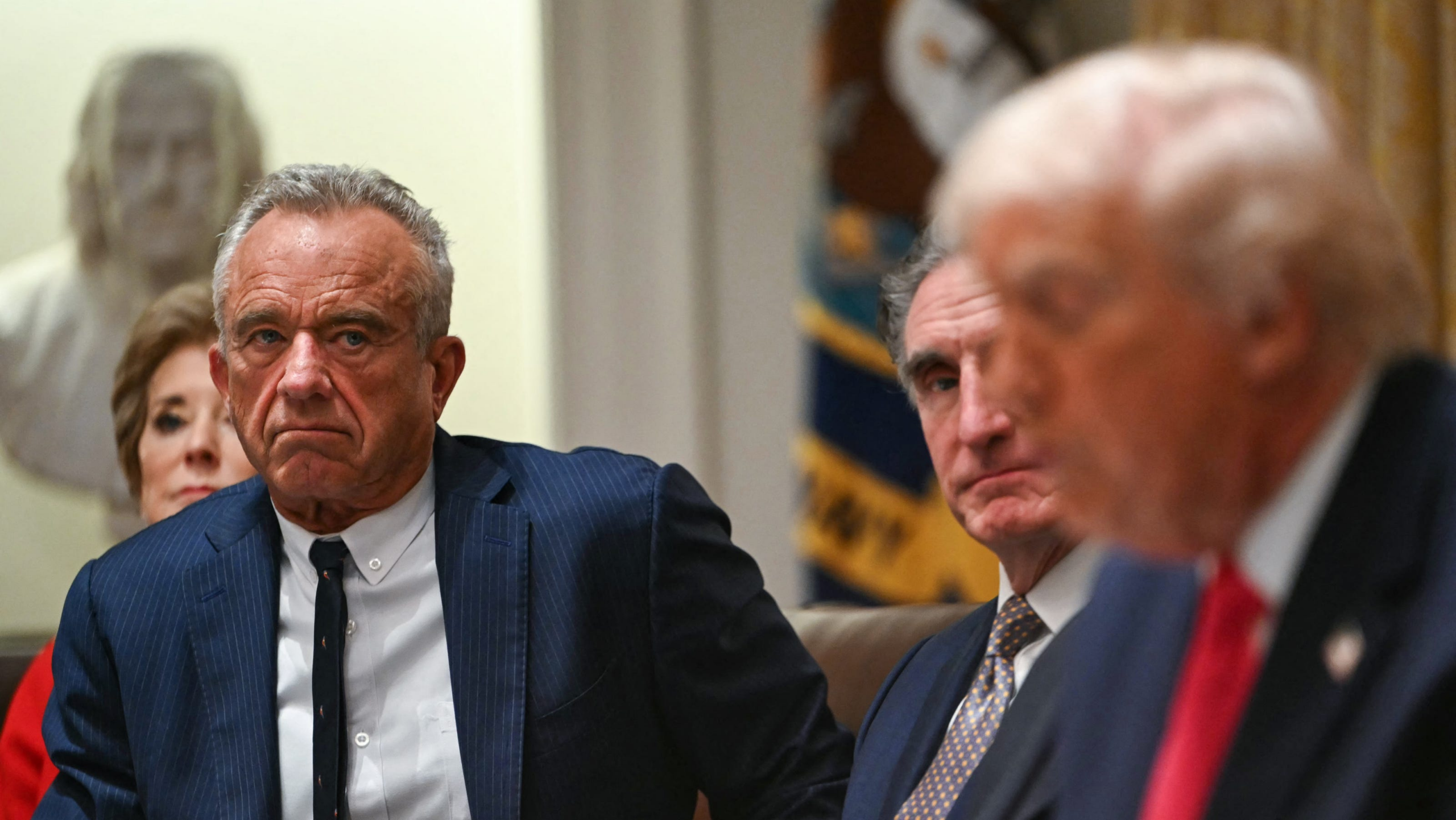
It’s no secret that Health and Human Services Secretary Robert F. Kennedy Jr., along with much of the Trump administration and the “Make America Healthy Again” movement, does not value infectious disease experts like me. “We’re going to give infectious disease a break for about eight years,” Kennedy told a group of anti-vaxxers in 2023 when he was a presidential candidate.
In their world, no one in the United States needs to think twice about the consequences of infections. Go ahead and forget the recent COVID-19 pandemic that killed more than 1 million Americans.
Kennedy’s stance is doubly ironic. First, of course, it is precisely because science has overcome so many historic infectious threats (thanks, vaccines and antibiotics!) that people here can be so cavalier now.
Second, and more troubling, these attacks are coming at a time when the health care community is facing a huge infectious disease physician shortage – and one that is rapidly accelerating in the current political climate.
Kennedy is about to face the consequences of his rhetoric, and members of the general public will be casualties.
Infectious disease doctors get to the bottom of complex cases
Where I work, as in most top hospitals, infectious disease doctors are among the most consulted specialists. We specialize in tackling complex medical problems, piecing together medical clues to diagnose infections and devise treatment plans.
We are known for “getting to the bottom” of the cases, and studies on outpatient care show infectious disease doctors spend more time in patient records than doctors of any other specialty.
Infectious disease doctors help ensure that antibiotics aren’t misused so they can keep protecting us. We help prevent and eliminate infections, safeguarding patients and families from exposure.
We are there when patients undergo transplants, chemotherapy or complex surgeries (all of which are frequently complicated by infection risk), and many of us work globally, combating ongoing scourges such as tuberculosis, malaria and HIV.
Yet in states like Montana, where I am from, there are only a handful of infectious disease specialists for the entire state. More than 80% of U.S. counties have no practicing infectious disease specialists.
Anti-vaccine rhetoric, visa restrictions lead to fewer doctors
And there is little relief coming. Data from recent years – a period that has coincided with drastic policy cuts in research funding, anti-vaccine rhetoric and politicization of public health – show that half of the spots in infectious disease training programs remain unfilled.
“Match” results were recently released for internal medicine fellowships, placing graduating residents in specialty training programs. In recent cycles, while applicant numbers have more or less remained stable, the number of hospitals seeking to train infectious disease specialists has increased, reflecting a growing and unmet need.
Alarmingly, this year, the total number of applicants matched for infectious disease training plummeted by nearly 25%. Also worrisome, half of infectious disease applicants are international medical graduates, whose future in the U.S. medical system is suddenly very uncertain given the administration’s costly new visa policies.
Of course, not all of this is related to Kennedy. Our field’s comparatively low compensation has long been a deterrent, but discourse matters. A positive focus on infectious disease doctors early in the pandemic preceded a bump in applications, a trend that was rapidly reversed as we went from being lauded to being lambasted.
We’re human. It wears you down.
Demonizing doctors is taking its toll
So it’s no coincidence to see a major shift in federal infectious disease health policy the same year our application rates dropped precipitously. Post-pandemic anger toward public health infectious disease experts has led to former chief medical adviser Tony Fauci requiring bodyguards and Centers for Disease Control and Prevention employees being shot at.
Our expertise is regularly attacked by political leaders. Patients increasingly believe their 20 minutes of online research over our years of training. We are accused of trying to harm those we have dedicated our lives to protecting.
Absolutely, infectious disease doctors must continue to have respectful conversations about patients’ concerns and help the public understand why our work is important. But drastic declines in the infectious disease training pipeline are going to have a devastating impact on our workforce, not to mention the patients and public whom we serve.
Humans have short memories and are notoriously bad at planning and changing their behavior, even for complications we clearly know are coming. This is especially true when money or power are at stake.
Pretending infectious diseases don’t carry any real risk may be part of the right’s political playbook, but it is not part of Mother Nature’s rule book. Take your pick of ever-evolving infectious threats, be it the rise of antimicrobial resistance, identification of tropical arboviruses locally acquired in the Northeast or resurgent bird flu pandemic looming over the farming industry.
These health crises don’t stop at the U.S. border. Without infectious disease experts, who will be left standing to help us navigate them?
Somehow, even after the pandemic and in the face of countless local and global microbial threats, many people remain convinced there is no need for infectious disease experts. Until there is.
Morgan Goheen, MD, PhD, works at Yale School of Medicine as a research scientist and board-certified infectious diseases physician, and she is a Public Voices Fellow of The OpEd Project, in partnership with Yale University.
Deny science? Well, don’t expect it to save you when needed