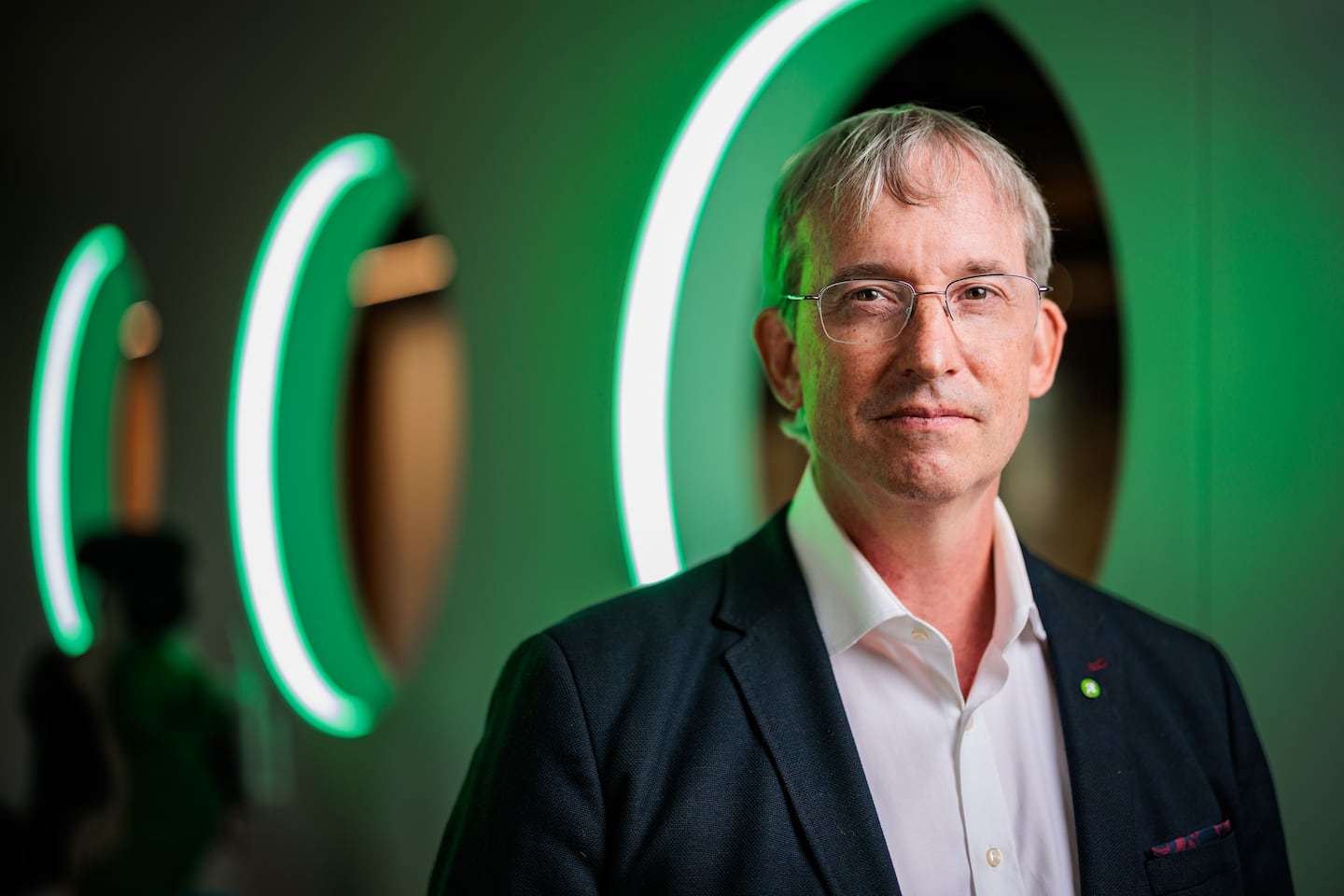
In January, Angle resigned as CEO of iRobot , the maker of Roomba vacuum cleaners, after a planned billion-dollar acquisition by Amazon fell apart.
Colin Angle, who cofounded iRobot in 1990 and led the firm for over 30 years, is raising a first round of funding for Familiar Machines & Magic, a Boston-area company that will develop a new kind of home robot focused on health and wellness, the Globe has learned.
Angle isn’t disclosing much about the new venture, except that it “is currently in stealth mode” and working to assemble “a world-class team of experts in robotics and AI,” he writes via email. In addition to Angle, the cofounders include Chris Jones, the former chief technology officer of iRobot, and Ira Renfrew, another iRobot alumnus who later worked for Amazon to design a small urban delivery robot that the company tested but later scuttled. The company plans to lease office space in Woburn, Angle says.
In medieval times, a “familiar” or “familiar spirit” was a supernatural companion. And Familiar Machines & Magic is developing robots as home companions, according to investors who have seen the startup’s pitch document, and a trademark application filed in October, which describes “robots in the form of an animal for use in interacting with humans to improve human health.” One investor described furry pets to address loneliness, with built-in AI software to allow them to emotionally relate to a human. (The investors asked not to be named because they didn’t have permission to talk about the company’s plans.)
Advertisement
At least two other startups with MIT ties have launched robotic companions for use at home, and neither proved commercially successful. Catalia Health, launched a robot called Mabu in 2019 that sought to keep patients on track with medication and healthcare regimens. That San Francisco company, founded by MIT Media Lab graduate Cory Kidd, shut down earlier this year. Another, Boston-based Jibo, launched a tabletop robot that was able to deliver weather forecasts and sports scores, and swivel to snap photos — but couldn’t compete with the cheaper Alexa intelligent speaker device from Amazon. It shut down in 2018.
Advertisement
“We’ve seen lots of failures in consumer robotics — and lots of attempts even by iRobot to do consumer robots in addition to Roomba” that didn’t pan out, says Fady Saad, founder of the Boston investment firm Cybernetix Ventures. One example: the $300 Looj gutter cleaning robot, which iRobot launched a decade ago but no longer sells. IRobot also created a prototype home companion robot roughly twenty years ago, Grommet, that could be viewed as a predecessor to the products that Familiar Machines is working on.
“I absolutely would pay attention to whatever Colin is doing next,” says Vinit Nijhawan, managing director at MassVentures, a quasi-public organization that funds early-stage tech companies. “Maybe it is Jibo 2.0, but maybe the timing is better now. Like all of these things, it’s all about technology, market fit, and timing. If anybody understands that, it’ll be Colin.” (Neither MassVentures nor Cybernetix Ventures are investors in Familiar Machines.)
The new startup “is going to tackle some hard problems,” says Tom Ryden, executive director of the robotics incubator MassRobotics and a former sales and marketing executive at iRobot. Ryden says that 2024 has been a “rebound year” for funding of robotics startups, after a difficult 2023, and he sees the funding raised by Familiar Machines as evidence of continued interest in the sector.
In 2024, in the wake of the failed acquisition by Amazon and tougher competition from rivals, iRobot has cut roughly 50 percent of its staff, leaving the company with about 550 employees.
Angle is also on the board of Beverly-based Ixcela Health, a company run by his wife, Erika Angle, which analyzes people’s gut health and recommends personalized dietary plans.
Advertisement
Scott Kirsner can be reached at kirsner@pobox.com. Follow him @ScottKirsner.
Former iRobot CEO Colin Angle launches home robotics startup