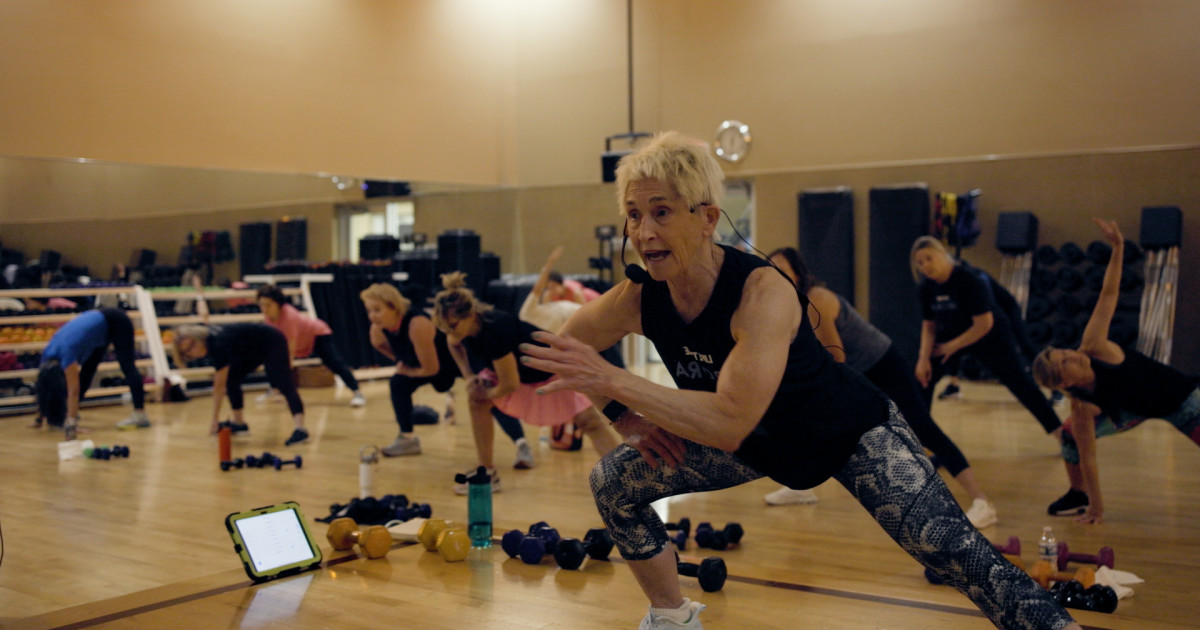
Peggy Fifield, a 74-year-old group fitness instructor at Life Time Crosstown in Minnesota, is familiar with a good workout—and she has been for most (if not all) of her life.
While she’s a fitness teacher now (and has been for 16 years), she used to be a physical education instructor and gymnastics coach at a private school, a gymnast at the University of Minnesota “back in the day,” a bodybuilding competitor at age 37, a runner of four marathons and now “running after eight grandchildren.” (Tired yet?)
At 74, she still feels in great shape. “Considering my age, I am much more aware of what I should be doing, and am more educated regarding wellness, fitness and longevity compared to when I was 20 years old [and] competing on the University of Minnesota women’s gymnastics team,” Fifield tells Parade. “I am blessed to be able to do what I love doing: move and inspire others to be the strongest and most confident people they can be.”
Ahead, she shares her weekly workout routine, which includes multiple group fitness classes she teaches and more.
🩺SIGN UP for Parade’s health newsletter with expert-approved tips, healthy eats, exercises, news & more to help you stay healthy & feel your best self💊
Fifield’s Weekly Workout Routine
Monday
Fifield starts the week by teaching a combination class that incorporates low-impact cardio and strength training, such as kickboxing, cardio interval training and low-impact dance routines. “The cardio takes up half the class, and the other half is strength training,” she explains.
This class (like most she teaches) is an ARORA class. ARORA classes are 45 minutes and for older adults (55+), though all ages are welcome.
Tuesday
Fifield teaches two classes on Tuesdays: the combo class mentioned above and an ARORA dance class.
Related: Break a Sweat! 114+ Free Streaming Workouts to Do From Home
Wednesday
If you thought two classes a day was a lot, try three. On Wednesdays, Fifield teaches two ARORA aqua classes (which are one hour long each) followed by an ARORA total body class.
“The ARORA total body class is a perfect combination of cardio and strength training, mixed with neuroplasticity drills to improve cognitive health,” she says. “Many balance skills and exercises are introduced and practiced in this class as well.”
The neuroplasticity exercises help with memory, coordination, recall, mental focus, reaction time and agility. Examples include brain-hand games, dual-task exercises, standing on one foot and counting backward, balancing on one foot while counting backward from 100 by threes and more. Additionally, she gives the members five words to remember throughout and after the class.
Fifield recommends this class especially to people interested in improving their strength, mental focus and balance, all of which are key to healthy aging.
In the aqua class, resistance equipment is used, believe it or not. Fifield uses figure 8 bands, long resistance bands, foam dumbbells, noodles and push plates.
Thursday
Fifield is back at it with two ARORA classes on Thursday—an aqua one and a strength one.
“The ARORA strength class focuses on simple strength and muscle endurance training,” she says. “The exercises are grounded and traditional.”
Every strength class challenges all muscle groups: upper body, lower body and core. Examples of exercises utilized include:
Lower body: squats, plie squats, lunges, deadlifts, calf raises, glute bridges, inner and outer thigh exercises
Upper body: back rows, flies
Deltoids: overhead presses, upright rows, lateral lifts, front raises
Triceps: tricep kickbacks, behind-the-head extensions, lying close-grip chest presses
Biceps: hammer curls, traditional curls, concentration curls
Chest: push-ups, chest press, chest fly
Core: various crunches, planks/modified planks, side planks, standing core exercises
Saturday
The class Fifield teaches on Saturdays is called “Lift Strictly Strength.” It isn’t an ARORA class, and it lasts an hour. Lift Strictly Strength utilizes resistance equipment that targets all muscle groups and provides a comprehensive workout.
Additionally, in all of her strength classes—so this one and the ARORA one—she uses a variety of equipment, such as dumbbells, weighted bars, resistant tubing, gliding discs, small exercise balls and the step.
Related: The One Strength Move Everyone Over 60 Should Do for a Longer Life, According to Trainers
Friday and Sunday
Fifield doesn’t teach classes on Friday and Sunday, but that doesn’t mean she’s not moving. She loves to swim for an hour, bike or do step aerobics at home. She also adds the following movements to her day if she feels the class wasn’t demanding enough:
2 sets of 30 pushups
3 sets of 15 chest presses (80 lbs.)
3 sets of 15 lat pulldowns (65 lbs.)
3 sets of 15 Romanian deadlifts (50 lbs.)
3 sets of side planks and traditional planks for 1-2 minutes
Fifield’s Other Exercise Routines
Yep, we’re still not done listing all of Fifield’s physical activity. She performs the “farmer’s carry” three times a week, works on her grip strength weekly by performing a suspended bar hang or dead hang, and staves off osteoporosis with box jumps and jumping rope. She does three sets of 15 box jumps three times a week and three sets of 60 jump-ropes three times a week.
Related: ‘After an Osteoporosis Diagnosis, I Increased My Bone Density Naturally—Here’s Everything I Did’
Additionally, Fifield walks three to four miles a day, and after dinner for 10 to 15 minutes, always with a weighted vest. Walking after a meal has led to many benefits, she says, such as healthy blood sugar levels, better digestion, lower blood pressure and a boosted mood and mental health state.
Fifield doesn’t forget about the importance of mobility, balance and recovery either. “I prioritize sleep, foam rolling, massage gun massage and frequent saunas each week,” she says.
After all, while moving your body is a piece of health, it’s not the only one. Health is holistic, and we can work to improve it in a variety of ways—fitness classes sometimes included.
“Working out is a powerful confidence builder mentally, emotionally and physically,” Fifield says. “I move because I can. There will come a day that I can’t; I want to have no regrets.”
Up Next:
Sources
‘I’m 74 and in Great Shape-Here’s My Workout Routine’