When President Donald Trump takes aim at costs imposed on Americans by “big health insurance companies,” he proposes stopping payments to insurers and instead giving the money directly to Americans so they can purchase care themselves “at a much lower cost.”
What is largely absent from the conversation surrounding rising prices is a serious examination of the role hospitals play in driving up health care costs — and, ultimately, what Americans pay every year.
Politically, this omission makes sense. Americans are furious about premiums, deductibles, out-of-pocket costs and the constant fear coverage could hinge on a single phone call. Insurers are easy targets. They are visible, bureaucratic and widely disliked.
But to be serious about lowering costs requires zooming out.
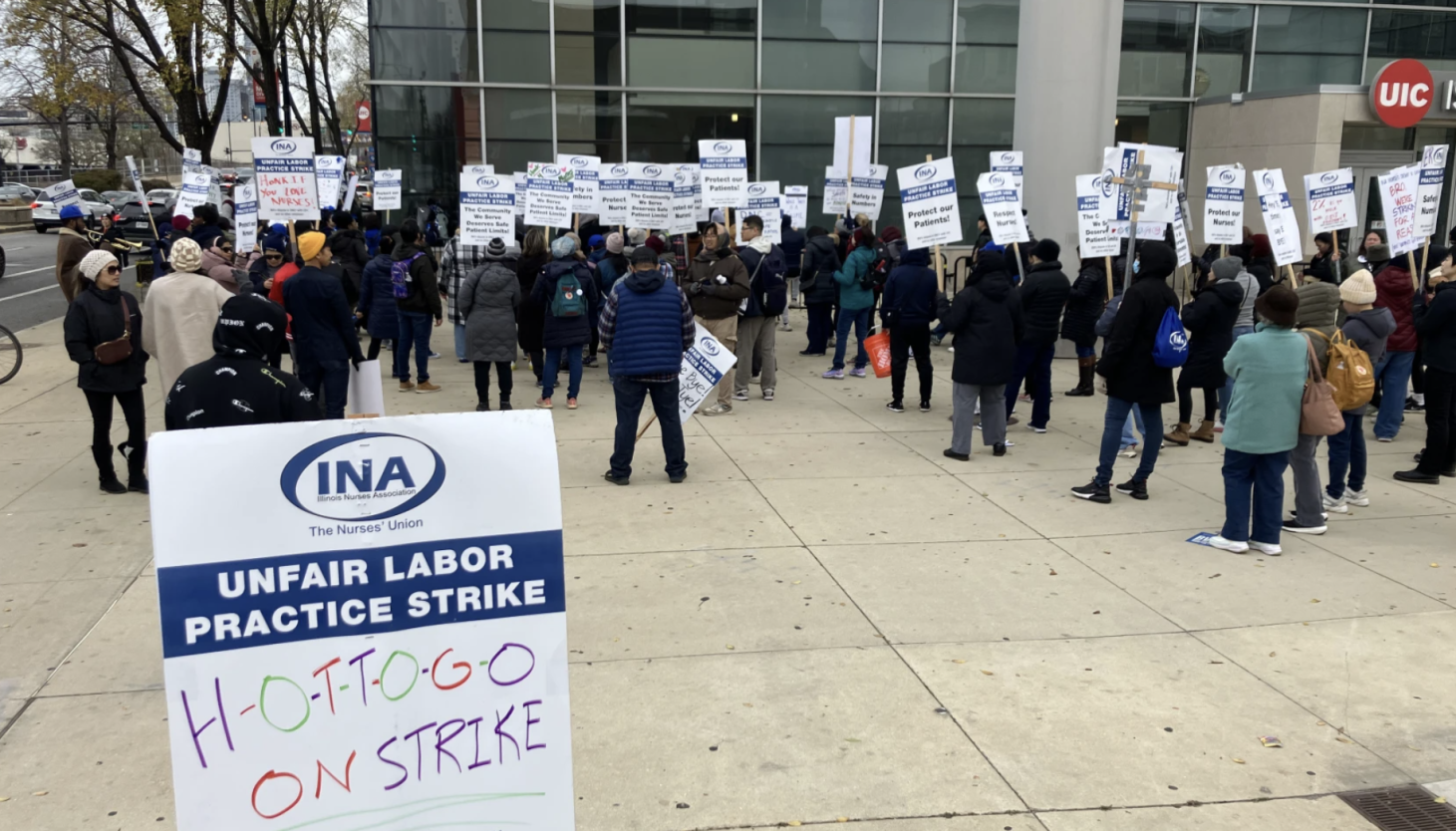
For much of 2026, thousands of registered nurses across the country have stood on picket lines, warning through collective action that something inside hospital systems was breaking. They have raised concerns about unsafe staffing levels, unsustainable patient loads and business models that treat labor as a line item to be squeezed rather than the backbone of patient care.
Those warnings did not begin with a strike and did not end when nurses returned to work.
There is an old saying in health care: Nurses’ working conditions are patients’ healing conditions. That is not poetic. It is policy.
If hospital services account for nearly a third of all U.S. health spending — roughly $1.6 trillion in 2024, according to the Kaiser Family Foundation — any serious conversation about affordability must include what is happening inside hospital systems.
And here is what often gets overlooked: Nurses’ work rarely appears clearly on a hospital bill. Patients see the facility charge, the imaging charge and the pharmacy line item.
What they do not see are the hours of monitoring that prevent cardiac events, the medication double-check that stops dosing errors or the early intervention that prevents a costly intensive care unit admission.
The most essential labor in health care is invisible on an invoice.
Patients pay for staff cuts
When hospital systems cut staffing to improve margins, the immediate savings may look efficient on paper. But thin staffing often means longer stays, higher complication rates, avoidable readmissions and burnout-driven turnover, all of which are enormously expensive.
Labor decisions upstream drive costs downstream.
Meanwhile, hospital consolidation has accelerated dramatically over the past two decades. Large systems have acquired competitors, strengthened their negotiating leverage and expanded their regional dominance. Research consistently shows as hospital competition declines, prices for privately insured patients rise — often without measurable improvements in quality.
That trend should prompt investigations in state capitols and congressional hearing rooms alike. Instead, much of the political focus remains fixed on insurers and on rerouting payment streams.
However, health care inflation is not just about who writes the check. It is about who sets the price.
For-profit and nonprofit hospital systems wield enormous power in that equation. Executive compensation packages can exceed $10 million at public for-profit hospitals. At the same time, frontline employees continue to report staffing pressures that stretch patient safety.
This is why the voices of registered nurses matter so deeply in this debate. Not only are they among the most trusted professionals in the country, but their vantage point is operational rather than ideological. They see where resources are abundant and where they are scarce. They see how administrative expansion compares with bedside staffing and how consolidation reshapes care delivery in real time.
They understand something policymakers often overlook: You cannot cut your way to high-quality, low-cost care by shrinking the workforce that actually delivers it.
If Washington truly wants to lower health care costs, the conversation must move beyond slogans about insurers and toward structural reform that includes confronting consolidation, enforcing price transparency, establishing safe staffing standards and redesigning incentives to reward outcomes rather than volume.
An honest examination of affordability requires scrutiny of hospital cost structures and the market power that shapes them, because these costs are being passed on to patients. Until that happens, Americans will continue to feel the strain not just in their premiums but in the quality and safety of the care they receive.
This is the conversation the Trump administration should be having with the American people.
Nurses are an afterthought in health care debate, and that’s deadly