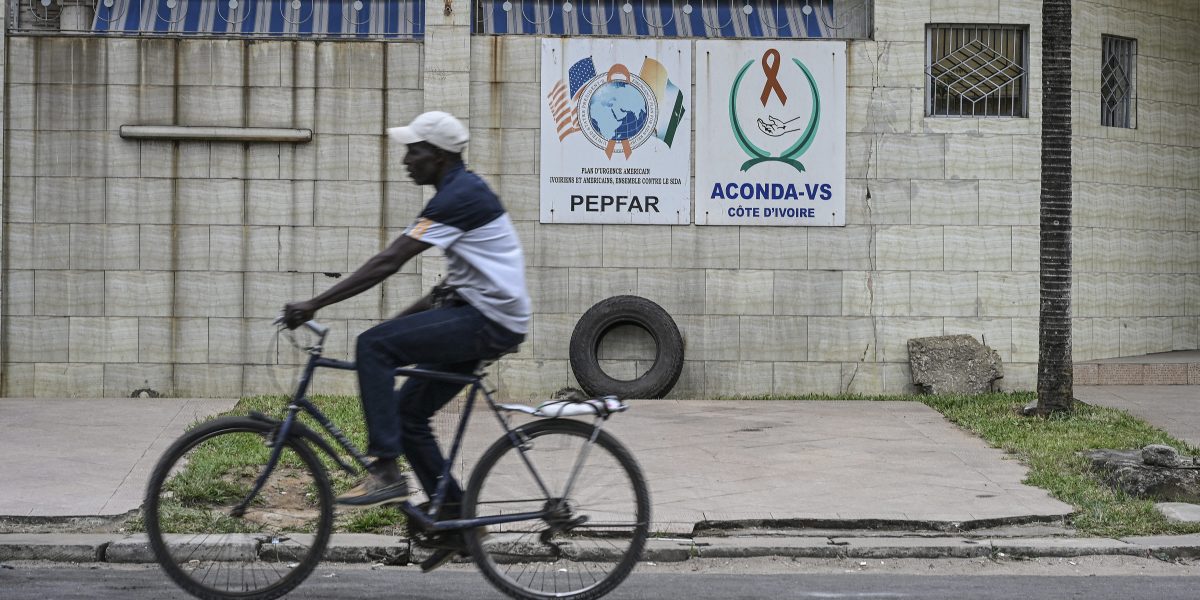
The Trump administration plans to condition global health assistance on foreign countries sharing significant amounts of health data with the United States, including on abortion, according to a template for an aid agreement obtained by The Intercept.
The template agreement, which references the President’s Emergency Plan for AIDS Relief, or PEPFAR — but also applies funding to fight malaria, tuberculosis, and other pathogens — would require countries that receive global health assistance to share a broad range of health care and pathogen data for the next 25 years.
The model document would also require foreign governments to provide the United States with “any data access or information needed to monitor compliance” with the Helms Amendment, which prevents U.S. federal funds from being used to provide abortion care abroad. This stipulation would give the United States broad authority to collect data on abortion care and policy for decades to come.
“The [agreement] is just another example of the Trump Administration’s playbook for using its power and influence to further its anti-choice agenda and undermine critical national public health responses,” wrote Melissa Cockroft, global lead on abortion for the International Planned Parenthood Federation, in a statement to The Intercept.
The document was developed in line with the State Department’s new “America First Global Health Strategy,” which seeks to broadly eliminate multilateral cooperation on international health care initiatives, like the Pathogen Access and Benefit Sharing system being negotiated by the World Health Organization, in favor of direct agreements between the United States and other countries.
After the government shutdown brought negotiations to a screeching halt, the department has renewed its efforts to reach bilateral global health agreements with dozens of countries, primarily in Africa, identified in its America First Global Health Strategy. The State Department is supposed to complete the deals by the end of the year.
Global health experts who spoke to The Intercept cautioned that these agreements appear to be highly unbalanced, giving the Trump administration sweeping authority to extract data on a number of issues, including on abortion, raising significant concerns about misuse at a time when the Trump administration is looking to limit access to abortion globally.
The State Department did not respond to a request for comment.
Collecting data itself isn’t an unusual function of a global health initiative, said Mitchell Warren, the executive director of AVAC, a nonprofit organization focused on HIV prevention.
PEPFAR, in particular, “has always been very data rich, lots of data collected and analyzed, but in a very collaborative nature between governments, civil society, and the United States government … and there’s always been great clarity on why we’re collecting this data,” he said.
However, Warren also noted that the section around “any data access” necessary to monitor compliance with the anti-abortion Helms Amendment — which gives broad discretion to the United States to request access to abortion-related data for decades — goes far beyond that scope.
“The part about Helms and requiring compliance information on that for 25 years, along with everything else, does raise some concerns about what [the administration] is doing with this,” said Elisha Dunn-Georgiou, president and CEO of Global Health Council. “Is there a larger play at foot to use data to monitor countries’ regulatory moves around liberalizing restrictions on abortion?”
While it’s unclear exactly how the Trump administration plans to use this data, Cockroft said the model agreement is concerning against the larger backdrop of its anti-abortion agenda.
In January, President Donald Trump reinstated the global gag rule, a policy that prevents foreign organizations that receive global health assistance from providing information, referrals, or services related to abortion care or advocating for abortion access.
“We know the Trump administration is seeking at all costs to restrict abortion access globally,” said Cockroft. “Requests from the Trump administration in the MoU for ‘any data’ for compliance monitoring are very concerning, as it is unclear how exactly the data will be used and to what ends.”
Dunn-Georgiou told The Intercept that the administration is also in the process of expanding the rule, potentially to encompass all non-military foreign assistance, U.S.-based nonprofits, and foreign governments, massively expanding its scope and impact.
While there’s no public information on how exactly these final agreements will differ from the template produced by the Trump administration, most recipient countries, particularly in Africa, don’t have much negotiating power to change the terms to their benefit.
“People are getting sick. Medicine is hard to find. I’ve even heard of condom shortages in some countries because the prevention funding for HIV has been stalled,” said Dunn-Georgiou. “Many countries are feeling so squeezed for funding that they will take the deal.”
Trump Wants to Make African Countries Share Abortion Data for AIDS Funding