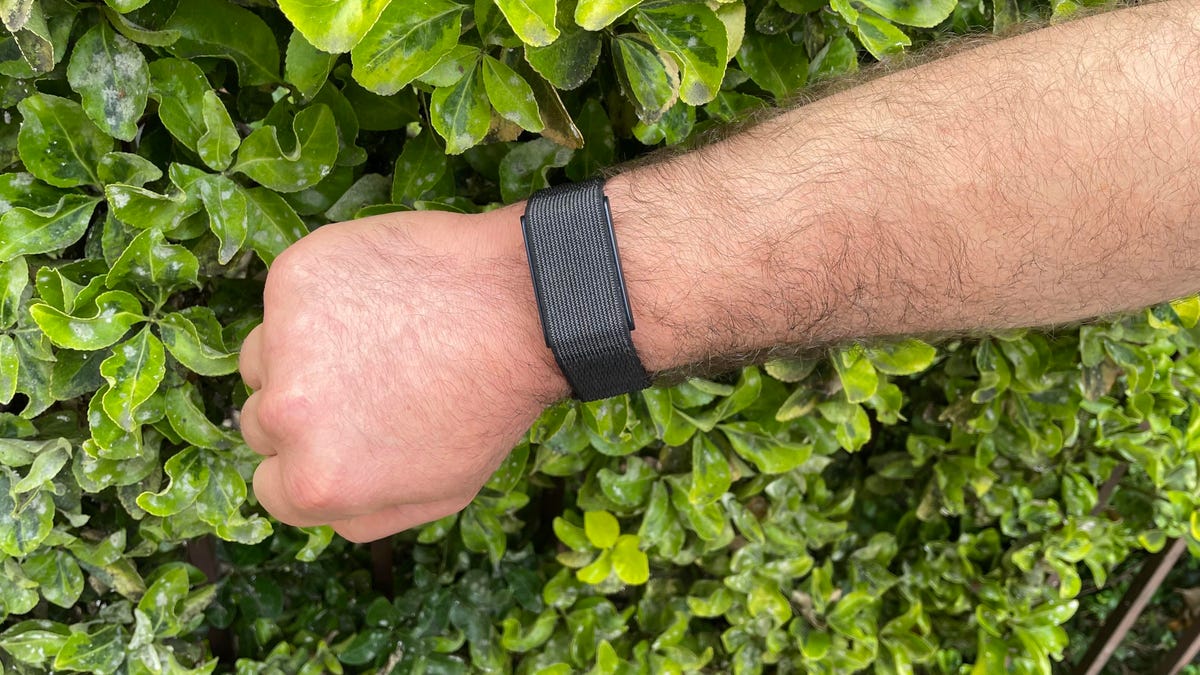
Amazfit, makers of such smartwatches as the Bip 5 and the new Balance 2, recently released its Helio Strap, a fitness tracker that has all the core functions of a smartwatch, but in an ultra-minimal form: no watch face, no decorative elements (and no subscription).
The strap is about as simple as you can get — just a solid black band with the tracking component below it. Unlike other popular straps like the Whoop 4.0 (or new 5.0), there’s no buckle, making the whole thing incredibly light at just 20 grams without the strap.
Also: I would ditch Apple’s most expensive smartwatch and buy this one instead
This results in a device that’s not only affordable at $99, but also extremely battery efficient — lasting over 10 days on one charge for normal use and up to 25 days in battery saver mode.
I’ve been wearing the Helio strap for the past month now, and one of the main reasons why it works so well is because the app that Amazfit’s smartwatches work with — Zepp, for Android and iOS — is good enough to carry, providing all the useful health and fitness metrics you could want, including workout tracking, heart health, and sleep stats.
Also: The best sports watches of 2025: Expert tested and reviewed
The lack of a watchface also eliminates the inherent distraction of looking at it in the middle of a workout — something I find myself constantly doing any time I wear a smartwatch. By relegating everything to the app, you can put your phone away and not worry about checking it until afterwards.
The app also has its share of unique metrics intended to provide deeper insights into health behavior. For example, the BioCharge feature generates a number for you in the morning (a score out of 100) that tells you what kind of shape you’re in for the coming day, with the score changing as you progress through the day.
This number is generated from the quality of sleep you got, what kind of day you had yesterday, your resting heart rate, your activity level, and your stress. For example, if you had a stressful day previously and didn’t sleep well, your BioCharge will start out low, putting you at 60 at the start of the day. A great night of rest, however, and you might start the day out at 100.
The app mentions that it needs at least seven days of data to project an accurate assessment, and I found this to be more or less accurate, not just with BioCharge but also with sleep data and PAI, Zepp’s other proprietary health score.
Also: One of the best rugged smartwatches I’ve tested is also one of the longest lasting
PAI, or
This minimalist fitness tracker is a refreshing alternative (with no subscription)