To place an obituary, please include the information from the obituary checklist below in an email to obits@pioneerpress.com. There is no option to place them through our website at this time. Feel free to contact our obituary desk at 651-228-5263 with any questions.
General Information:
Your full name,
Address (City, State, Zip Code),
Phone number,
And an alternate phone number (if any)
Obituary Specification:
Name of Deceased,
Obituary Text,
A photo in a JPEG or PDF file is preferable, TIF and other files are accepted, we will contact you if there are any issues with the photo.
Ad Run dates
There is a discount for running more than one day, but this must be scheduled on the first run date to apply.
If a photo is used, it must be used for both days for the discount to apply, contact us for more information.
Policies:
Verification of Death:
In order to publish obituaries a name and phone number of funeral home/cremation society is required. We must contact the funeral home/cremation society handling the arrangements during their business hours to verify the death. If the body of the deceased has been donated to the University of Minnesota Anatomy Bequest Program, or a similar program, their phone number is required for verification.
Please allow enough time to contact them especially during their limited weekend hours.
A death certificate is also acceptable for this purpose but only one of these two options are necessary.
Guestbook and Outside Websites:
We are not allowed to reference other media sources with a guestbook or an obituary placed elsewhere when placing an obituary in print and online. We may place a website for a funeral home or a family email for contact instead; contact us with any questions regarding this matter.
Obituary Process:
Once your submission is completed, we will fax or email a proof for review prior to publication in the newspaper. This proof includes price and days the notice is scheduled to appear.
Please review the proof carefully. We must be notified of errors or changes before the notice appears in the Pioneer Press based on each day’s deadlines.
After publication, we will not be responsible for errors that may occur after final proofing.
Online:
Changes to an online obituary can be handled through the obituary desk. Call us with further questions.
Payment Procedure:
Pre-payment is required for all obituary notices prior to publication by the deadline specified below in our deadline schedule. Please call 651-228-5263 with your payment information after you have received the proof and approved its contents.
Credit Card: Payment accepted by phone only due to PCI (Payment Card Industry) regulations
EFT: Check by phone. Please provide your routing number and account number.
Rates:
The minimum charge is $162 for the first 12 lines.
Every line after the first 12 is $12.
If the ad is under 12 lines it will be charged the minimum rate of $162.
Obituaries including more than 40 lines will receive a 7.5% discount per line.
On a second run date, receive a 20% discount off both the first and second placement.
Place three obituaries and the third placement will be free of charge.
Each photo published is $125 per day. For example: 2 photos in the paper on 2 days would be 4 photo charges at $500.
Deadlines:
Please follow deadline times to ensure your obituary is published on the day requested.
Hours
Deadline (no exceptions)
Ad
Photos
MEMORIAM (NON-OBITUARY) REQUEST
Unlike an obituary, Memoriam submissions are remembrances of a loved one who has passed. The rates for a memoriam differ from obituaries.
Please call or email us for more memoriam information
Please call 651-228-5280 for more information.
HOURS: Monday – Friday 8:00AM – 5:00PM (CLOSED WEEKENDS and HOLIDAYS)
Please submit your memoriam ad to memoriams@pioneerpress.com or call 651-228-5280.
American sports leagues treated global expansion as an aspiration for decades, but it was something to pursue only when convenient — and often without much strategic forethought.
The calculus changed in 2025, as evidenced by the organizations that signaled that going global is now a permanent feature of doing business as an American sports league, and the National Football League has provided the clearest example of how far a U.S. league is willing to go.
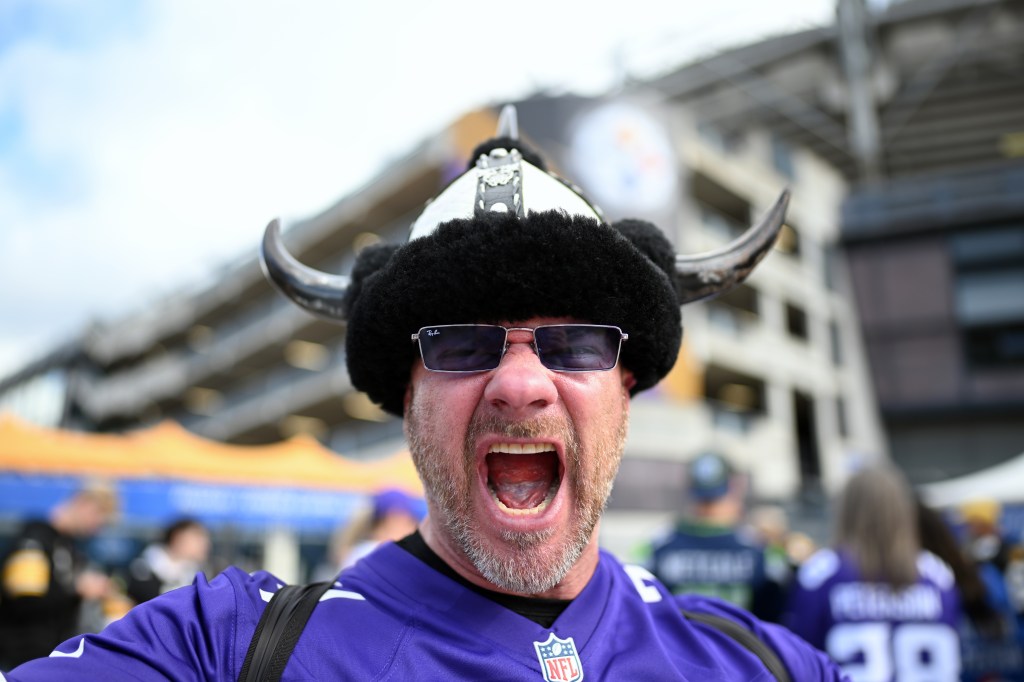
Over the last 12 months, it expanded its overseas schedule from five to seven games — and even scheduled the Minnesota Vikings to play in Dublin and London on consecutive weekends. It was the league’s first-ever back-to-back overseas road trip, boosted by a global marketing program that involves all of the NFL’s teams. In some ways, it’s a prototype for what could be coming as the ambitious organization pushes for a 16-game international schedule.
Meanwhile, the National Basketball Association revealed it was seriously exploring the formation of a European competitive association. Those plans happened against the backdrop of its own expanding international schedule, which includes games in Mexico, Abu Dhabi and across Europe.
In soccer, the National Women’s Soccer League announced a clutch of new global streaming and broadcast agreements, and Major League Soccer shifted its calendar to align with global associations. Even golf pivoted. The Masters, the sport’s most prestigious American tournament, changed its rules to invite more foreign champions to the event. And we can’t forget about the National Hockey League, which opened a permanent European office.
These initiatives represent a shift away from business focused on American audiences to globalized entertainment available to everyone (There are exceptions, of course. Major League Baseball has long had a thriving fan base and business across Latin America.). Even a decade ago, this evolution seemed unlikely. The domestic opportunities with media rights deals — the largest source of income for major professional sports associations — and legalized sports betting were then compelling enough to keep leagues focused at home. Plus, the returns from global expansion have been limited and tenuous. For example, the NFL’s lauded annual series of games in London lost money as recently as 2016, despite consistent sellouts. The NBA, among the most aggressive organizations when it comes to expanding overseas, still loses money on its international games. And the NHL recently acknowledged that it would probably make more money playing overseas games at home.
What, then, has motivated the sports industry to seemingly ignore past and present challenges and keep investing abroad? Leagues are more financially resilient than they’ve been in years, thanks to the post-pandemic recovery — spurred by fans returning to stadiums and live entertainment — and a surge in private equity and other investments. And those gains coexist with growing uncertainty about the viewership habits in the domestic market. While American fans still love sports, younger ones are drifting away from watching full games to consume highlights on social media, so there are reasons to doubt that an old business model based on media rights growth will remain as lucrative.
Overseas fans offer another option to convert a wave of new investment into long-term returns, and two key factors ensure that the globalization boom has momentum going into 2026 and beyond.
First, American professional sports have become increasingly savvy at scouting, developing, and — above all — showcasing international talent. Foreign-born players are marketing hooks for overseas fans.
Second, the emergence of streaming has enabled leagues to deliver their content directly to consumers. For example, the NFL doesn’t have to rely upon individual broadcasters with different schedules and priorities to show its games in overseas markets.
Instead, since 2023, the organization has distributed games globally through DAZN, a single platform accessible to almost anyone with internet. Matchups can be watched both live and on demand and supplemented with additional content like NFL RedZone and NFL Network. Most importantly, fans can just pay for the NFL — they don’t need to buy into an expensive local cable or streaming package to get their football.
The arrangement seems to be working. Though viewership numbers aren’t available, in February, DAZN announced that paid subscribers to the NFL service grew 23% year-over-year. And it’s not just DAZN offering this kind of friction-free global streaming platform. Amazon Prime, Netflix, and Apple+ are acquiring and offering sports to countries beyond U.S. borders, too.
Of course, global expansion isn’t without possible downsides. As leagues shift their attention abroad, they could alienate fans at home who are accustomed to games being scheduled around their calendars. Not every American fan or season ticket holder is happy to see afternoon home games moved to London and broadcast early on Sunday morning.
More serious are the potential political and reputational consequences of doing business in authoritarian countries. In 2019, the NBA learned this the hard way when a tweet from then-Houston Rockets general manager Daryl Morey regarding Hong Kong led Chinese businesses to freeze out the association for years. The incident likely cost the NBA hundreds of millions of dollars.
But for now, the leagues are committing to an opportunity years in the making. Whatever the risks, 2025 is the year that American sports fully embraced business beyond its borders.
Adam Minter is a Bloomberg Opinion columnist covering the business of sports. He is the author, most recently, of “Secondhand: Travels in the New Global Garage Sale.”
American fans aren’t enough for US sports anymore