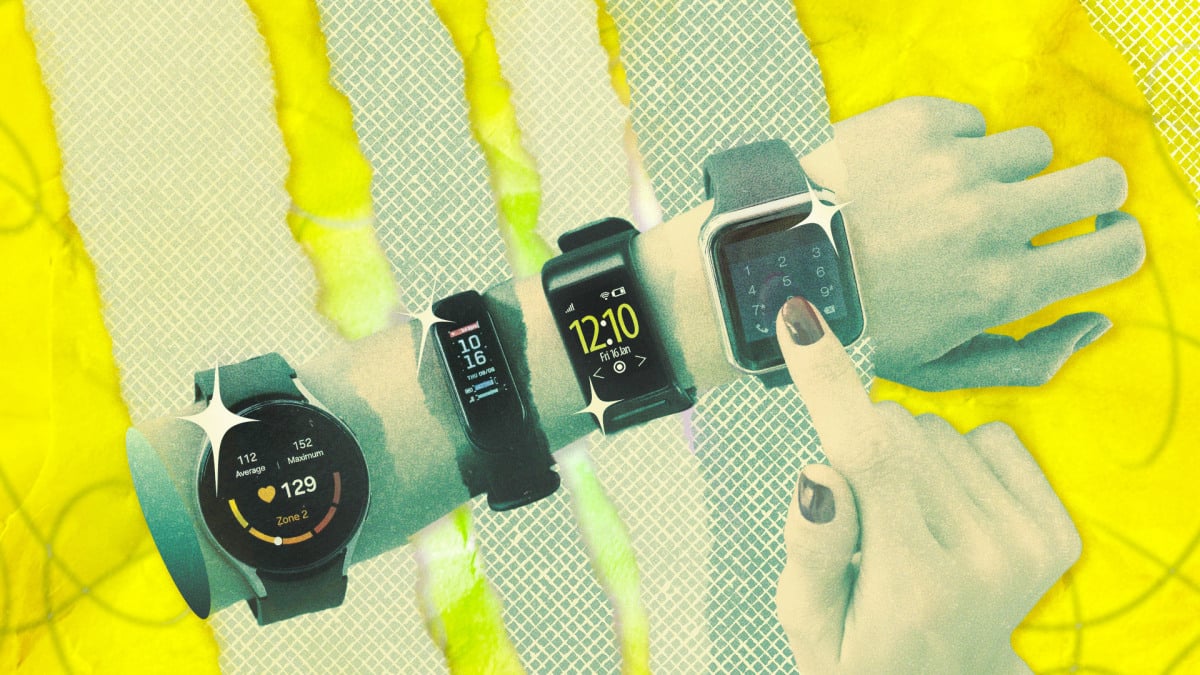
Scroll through r/Garmin, r/ouraring, or r/whoop and you’ll find threads from users debating the merits of pairing devices. Common combinations include a GPS smartwatch like a Garmin or Apple Watch alongside a recovery-focused tracker like Whoop or Oura, with users assigning each device a distinct purpose: notifications and workout tracking from the watch, sleep and recovery data from the ring or band, and so on.
As wearable technology becomes increasingly sophisticated—not to mention increasingly embedded in how we think about our health—at what point does all this monitoring stop helping you and start just generating noise?
Do you need multiple fitness wearables?
Before dismissing a multi-device setup as pure excess, though, it’s worth understanding why many people arrive there in the first place. After all, different devices have genuinely different strengths. Smart rings, for instance, are widely praised for sleep tracking, but struggle with workout detection (they don’t have GPS and have limited ability to capture exercise). A Garmin, meanwhile, excels at activity and training metrics, but it might be too bulky to sleep in night after night. Maybe your Apple Watch has the best notifications and cardiac monitoring, but you like to charge it overnight.
Many multi-device users are simply patching up all these gaps, always trying to use the best tool for each job. So if you’re into tracking your health, a multi-device setup sounds reasonable enough. Surely more inputs mean better data?
Not necessarily, says Dr. James Mitchell, an assistant professor in the Department of Biomedical Informatics at the University of Colorado Anschutz.
How Many Fitness Wearables Do You Really Need?