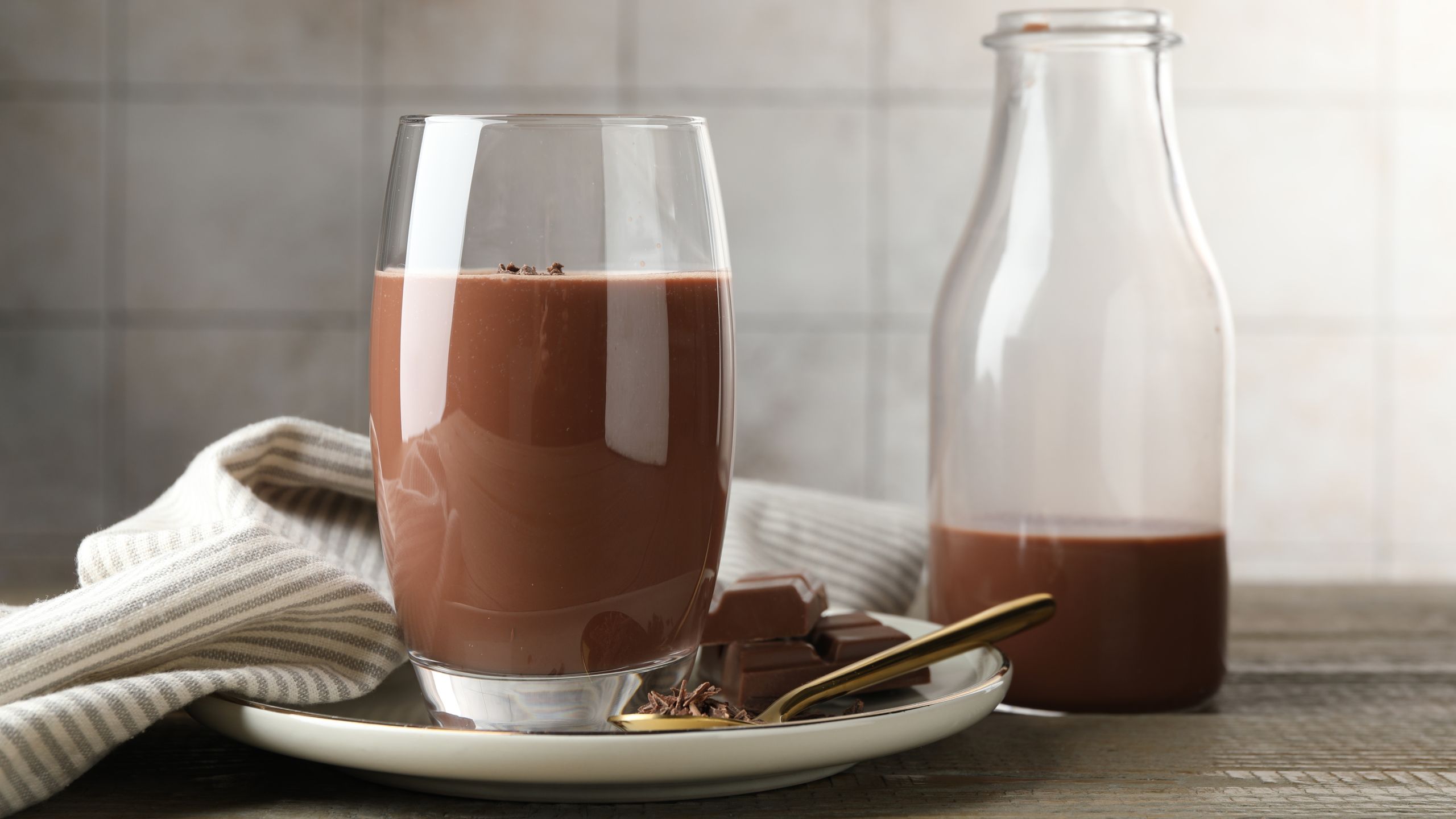
I’ve been hearing for years that chocolate milk is supposedly the holy grail of post-workout recovery. As a lifelong chocoholic, I’m more than happy to believe it. But after a sweaty long run or brutal gym session, I usually reach for an electrolyte drink or a glass of icy water. Chocolate milk feels more like a treat from the school canteen than serious recovery fuel.
A 2017 study analyzed 12 controlled trials and found that chocolate milk delivered similar and in some cases slightly better results compared to water or traditional sports drinks for certain recovery markers, including time to exhaustion. That said, researchers also noted that the overall evidence is limited and higher-quality trials are still needed.
So is this a genuine recovery hack hiding in plain sight, or just clever marketing wrapped in nostalgia? With the Manchester Marathon on my calendar and training intensity creeping up, I spoke to two sports nutrition experts to find out whether I should be stocking my fridge accordingly.
Can chocolate milk really help after a workout?
“Believe it or not, chocolate milk can be a helpful tool to kick off muscle recovery after a tough workout,” says registered dietitian, sports nutritionist and personal trainer Alexander LeRitz of JM Nutrition. That said, he cautions, “This doesn’t mean it is a superfood nor is it a green light to start chugging chocolate milk indiscriminately post-workout.”
So why does it actually work? Chocolate milk combines carbohydrates, protein, fluids and electrolytes all into one convenient drink. These are key nutrients your muscles need after intense exercise.
From a recovery standpoint, the carbs help replenish depleted glycogen stores, while the protein provides the building blocks for muscle repair and rebuilding. The fluids and electrolytes also help with rehydration, which is especially important after longer or high-intensity sessions when sweat loss is significant.
If you want the finer details, research inside the Human Nutrition & Metabolism journal reveals that chocolate milk typically contains a carbohydrate-to-protein ratio of around 4:1, which conveniently (for the choco milk lovers) aligns with the optimal ratio suggested by sports nutrition guidelines for post-exercise recovery.
What kind of workout warrants chocolate milk?
According to sports dietitian and strength and conditioning specialist David Goldman, MS, RD, CSCS, FAND, who also served as Chief Science Advisor for the Netflix documentary The Game Changers, it really comes down to two things: your body size and how hard you trained.
He points to the joint position statement from the Academy of Nutrition and Dietetics, Dietitians of Canada and the American College of Sports Medicine, which recommends 1 to 1.2 grams of carbohydrate per kilogram of body weight and 0.25 to 0.3 grams of protein per kilogram in the first couple of hours after exercise. For most people, that works out to roughly 15 to 25 grams of protein alongside a solid dose of carbs.
There is an important caveat, though. “To be clear, this only matters if you plan to work out hard again within the next eight hours,” Goldman says. If you are not doing a second intense session that day, the urgency drops significantly.
A typical 16-ounce serving of chocolate milk contains around 26 to 28 grams of carbohydrate and about 16 grams of protein. That is a decent contribution toward those targets. But whether it fully meets your needs depends on your body weight and training load.
And, as Goldman puts it,
I heard chocolate milk is the perfect recovery drink – so I asked 2 sports nutrition experts