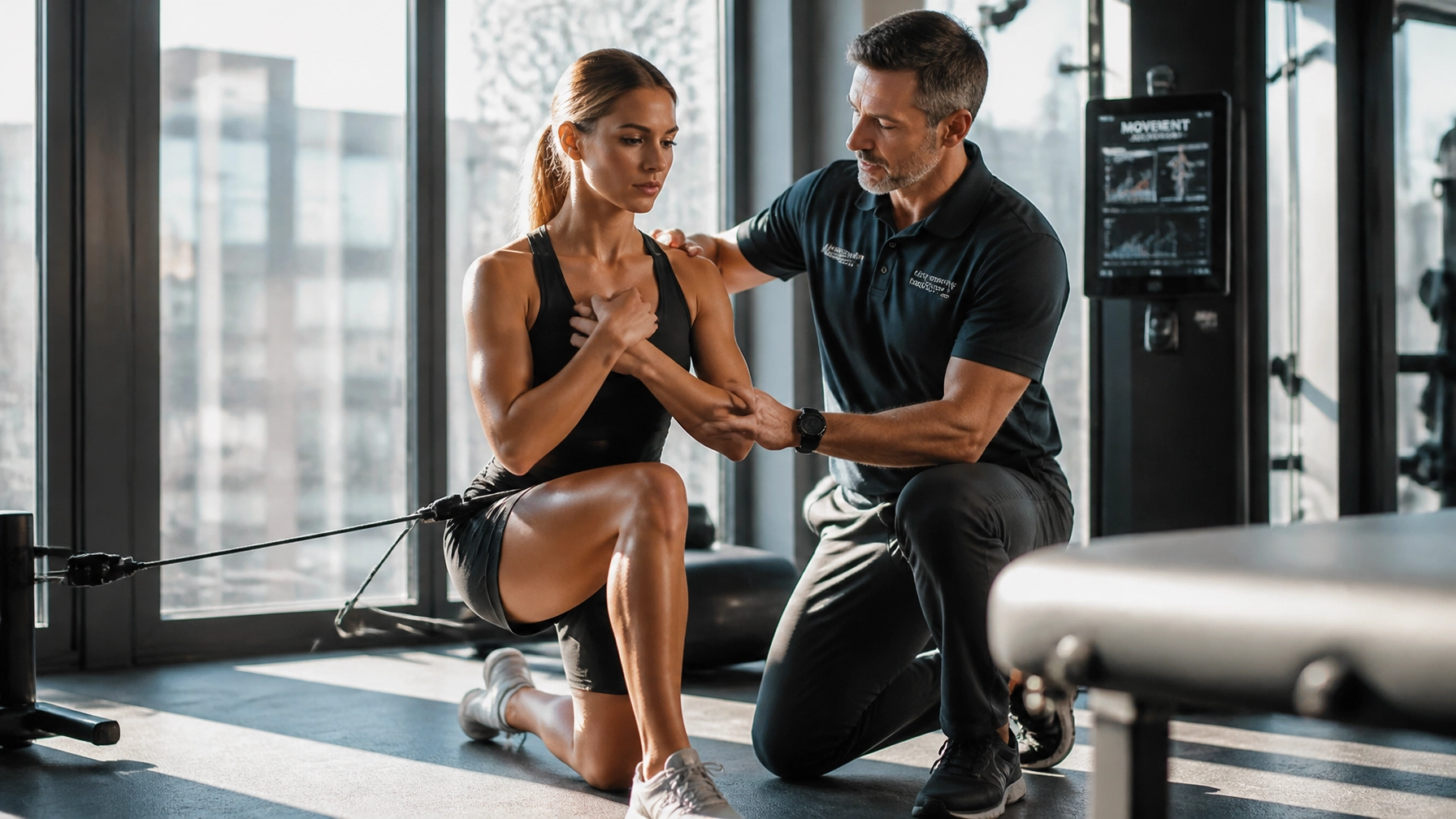
DOHA, Qatar : The landscape of physical therapy shifted decisively on Saturday as new clinical data from 2026 redefined the benchmarks for athlete rehabilitation, moving beyond traditional movement protocols to integrate nutritional interventions, biomechanical data processing, and specialized postpartum care.
From the elite training grounds of Aspetar to the primary care clinics of Nottingham, practitioners are abandoning "wait-and-see" approaches in favor of criteria-based, high-resolution recovery pathways. These shifts, highlighted in major journals like Nutrients and Medicine, signal a future where physical therapy is no longer an isolated discipline but a multimodal convergence of science and performance.
The Gut-Knee Connection: Prebiotics Enter the Rehab Room
In a definitive break from purely mechanical interventions, the 2026 INSPIRE trial (Kouraki et al., Nutrients) has validated the use of nutritional supplementation as a core component of physical therapy for knee osteoarthritis (OA). The study revealed that a daily 20g dose of prebiotic inulin, when combined with digital physiotherapy-supported exercise (PSE), significantly outperformed placebo and usual care in pain reduction.
Critically, the research found that inulin uniquely improved central pain sensitivity and grip strength: metrics that exercise alone often fails to move in the early stages of OA. For medical practitioners, the takeaway is clear: the "gut-hormone-muscle-pain axis" is a tangible target. The trial reported a retention rate for inulin users of nearly 96%, compared to roughly 79% for those on digital exercise programs alone, suggesting that dietary adherence can provide the physiological "bridge" patients need to stay compliant with their physical loading protocols.

"Decel to Excel": Turning Force Plates into Clinical Maps
The Journal of Orthopaedic & Sports Physical Therapy (JOSPT) has standardized the "Decel to Excel" framework, a move that brings elite-level force plate analysis to the standard clinic. By translating complex countermovement jump (CMJ) metrics into accessible Excel-based workflows, therapists can now quantify the precise moment an athlete is ready to return to play.
The framework focuses on the eccentric braking and deceleration phases of a jump: the moments where an athlete must absorb load before exploding upward. 2026 data indicates that traditional "jump height" metrics are insufficient for assessing knee stability. Instead, clinicians are now tracking:
- Braking Impulse: The total load-absorption capacity.
- Eccentric Rate of Force Development (RFD): How quickly an athlete can "shut down" downward velocity.
- Asymmetry Ratios: Identifying less than 10% side-to-side variance in braking duration.
This data-driven approach ensures that athletes are not just jumping, but landing and cutting with a reduced risk of secondary ACL injury.

The Aspetar Pathways: Eight Domains of Elite Recovery
In June 2026, Aspetar released its updated Rectus Femoris and Hamstring Injury Rehabilitation Pathways, setting a new global standard for muscle injury management. The pathways discard time-based recovery (e.g., "six weeks of rest") in favor of an eight-domain, criteria-based progression.
For the rectus femoris, the 2026 consensus emphasizes early, controlled loading as soon as 48 hours post-injury, provided pain levels remain below a 4/10 threshold. The "Reloading" phase then tightens these constraints, demanding a pain score of ≤2/10 during progressive strength-endurance circuits. For practitioners, this means shifting focus from the injury site to the entire kinetic chain: utilizing blood flow restriction (BFR) to preserve muscle mass when the tendon cannot yet handle maximal loads.
Key RTP Criteria for 2026 Muscle Rehab:
- Strength Symmetry: Less than 10% deficit in dynamometry tests.
- Pain Resolution: Complete absence of palpation pain.
- Load Tolerance: Successful completion of sport-specific "game scenarios" that exceed typical match demands.

Postpartum Performance: Biomechanics Meets Pelvic Health
The 2026 publication in Medicine has effectively ended the debate on whether physical therapy for postpartum athletes should focus on the pelvic floor or the core. The answer is both. The study demonstrated that biomechanics-based core muscle training: targeting the transversus abdominis, multifidi, and obliques: added to conventional Pelvic Floor Muscle Training (PFMT) resulted in an 83.3% improvement in strength, compared to just 63.6% for PFMT alone.
For the postpartum runner, this means "core stability" is no longer just about planks. It is about managing intra-abdominal pressure and ground reaction forces. The research highlights the necessity of supervised, progressive loading that moves from static activation to single-leg plyometrics, ensuring that the pelvic floor can counter the high-impact demands of competitive sport.

EMG Biofeedback: A Teaching Tool, Not a Crutch
Data from OrthoArchives 2026 provides a nuanced view of EMG-biofeedback in treating stress urinary incontinence (SUI). While a large-scale meta-analysis showed only "small" additional improvements in long-term symptom severity over well-supervised PFMT alone, the technology showed "moderate to large" benefits in improving muscle strength and technique acquisition.
The 2026 consensus recommends EMG-biofeedback as a "teaching phase" tool rather than a permanent fixture of physical therapy. It is most effective for athletes who struggle to isolate the correct musculature or those with low proprioceptive awareness. Once the motor pattern is established, the focus must shift to functional, unassisted training to ensure real-world durability.
Advancing Your Practice with Sports Medical News
As the evidence base for physical therapy continues to evolve at a brutal pace, staying informed is no longer optional: it is a clinical requirement. The integration of gut health, biomechanical metrics, and criteria-based pathways represents a fundamental shift toward a more objective, science-led profession.
At Sports Medical News, we bridge the gap between high-level research and daily clinical application. Our journalists track these developments in real-time, ensuring you have the latest data to optimize patient outcomes.
Stay ahead of the curve. Subscribe to our daily newsletter for breaking medical news and evidence-based insights delivered directly to your inbox.
For more in-depth analysis on sports medicine and recovery trends, visit our latest articles or contact our editorial team.