Based on facts, either observed and verified firsthand by the reporter, or reported and verified from knowledgeable sources.
Independent hospitals are increasingly rare in the United States amid rising costs and competition. But Jupiter Medical Center in Jupiter, Florida, has stood alone—comfortably—for 45 years.
JMC faces many of the same issues as its standalone peers, according to president and CEO Dr. Amit Rastogi. The health system is not immune to inflation or workforce shortages, but one investment in particular has helped it to thrive despite external pressures: robotics.
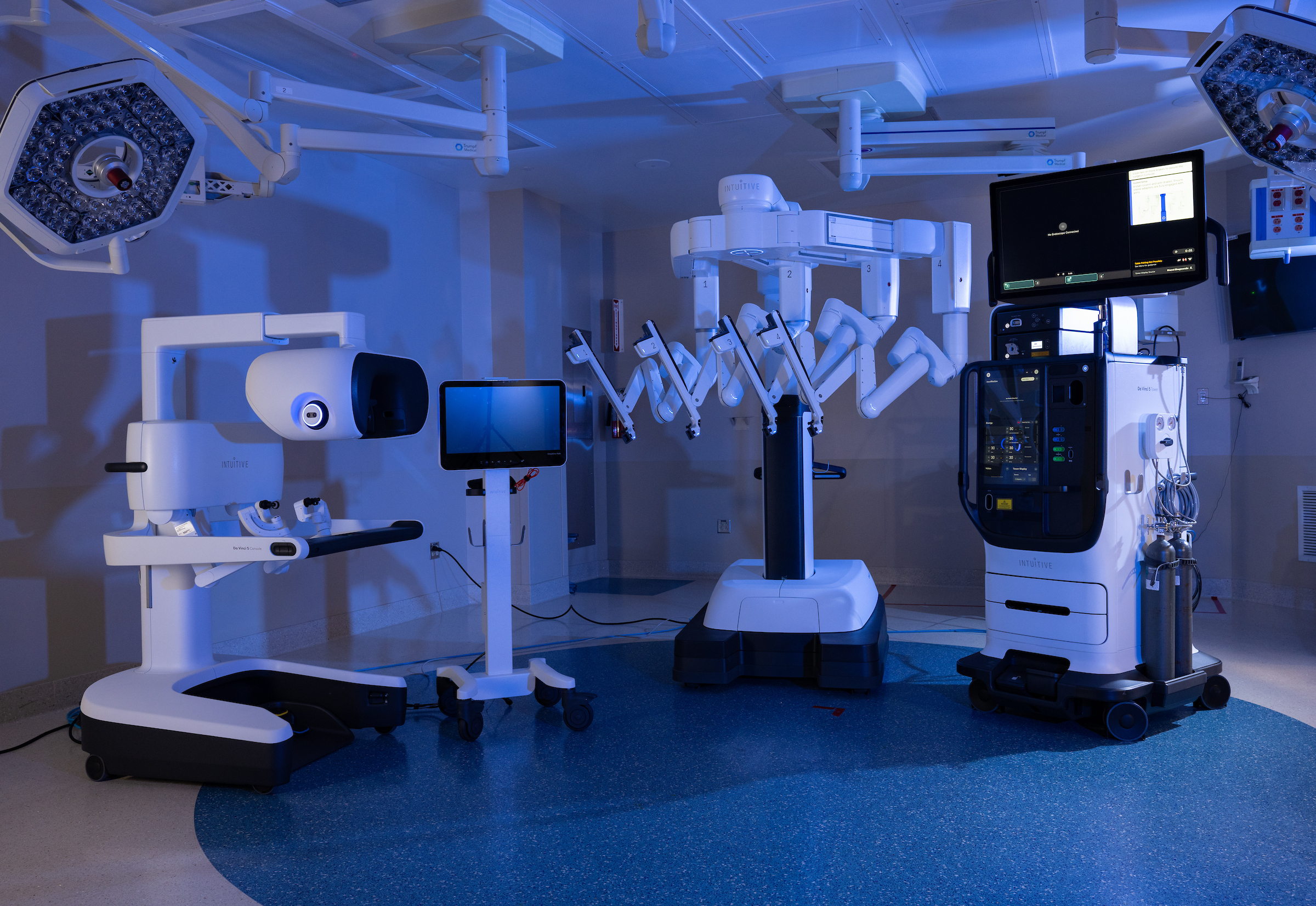
The health system launched its robotic surgery program in 2010, and it has grown into one of the largest, most advanced programs in the nation. Its $10 million collection includes six da Vinci robots and three orthopedic robots.
Advancing innovation, expanding access and elevating the patient experience are JMC’s top priorities heading into 2025, Rastogi told Newsweek—and surgical robots have helped the system to further all three goals.
Part of Jupiter Medical Center’s $10 million surgical robot collection. Part of Jupiter Medical Center’s $10 million surgical robot collection. Jupiter Medical Center
In JMC’s community, wait lists for elective surgeries were getting longer, Rastogi said. To expand access, the health system built a 90,000-square-foot surgical institute with 16 smart operating rooms and two hybrid operating suites, allowing for minimally invasive surgeries and open procedures. The new facility, which was unveiled in November 2023, gives JMC’s state-of-the-art technology a state-of-the-art home.
These investments have also been
This Independent Hospital’s Secret to Success? Surgical Robots